
Supporting Indigenous and interfaith climate justice
Highlighting two activists currently thought to be in prison in Russia, Tanya Jones connects formal climate talks to calls for justice and transformation.
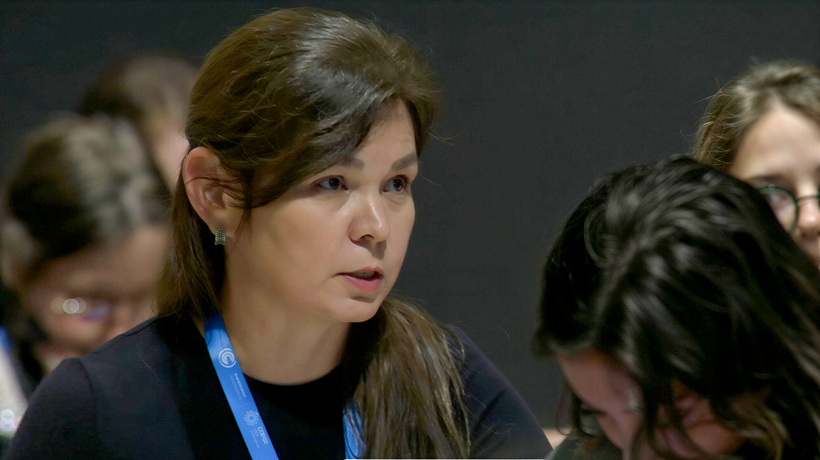
Climate justice is about mitigation, that is reducing greenhouse emissions, especially by phasing out fossil fuels. It is about helping communities to adapt to a changing climate and to meet the costs of the harm, what we call 'loss and damage', that happens despite all efforts at adaptation. But it also means listening to those with lived experience of climate damage and injustice.
Standing in solidarity
Daria Egereva and Natalia Leongardt probably won't be able to speak at this year's climate talks. They were arrested by the Russian authorities after last year's COP, where Daria Egereva, a Selkup Indigenous activist and human rights defender from western Siberia, co-chaired a key forum for Indigenous people. As far as we know, they are still in a Moscow detention centre, awaiting a trial which could see them in prison for twenty years.
Earlier this year, Quakers in Britain joined many other organisations in signing a statement calling for the women's immediate and unconditional release. Many other bodies have expressed their deep concern, recognising wider patterns whereby campaigners and human rights defenders, especially Indigenous people, face criminal proceedings. These proceedings are designed to silence their voices, exclude their participation and undermine their communities and leadership.
If that happens, we are all harmed. Indigenous leadership is key to resisting exploitative extraction, to modelling healthy relationships with non-human nature and to sharing traditional ecological knowledge about how to adapt and live lightly upon the earth.
The Bonn climate meetings
Paris, Kyoto, Copenhagen – these are the landmark places of international climate talks, the COPs where the big deals were made, or sometimes missed. With marches, demonstrations, heads of state and corporate lobbyists, they are occasions of spectacle, passion and sometimes high drama.
And then there's Bonn. Every June, the United Nations Framework Convention on Climate Change (UNFCCC) holds a preparatory conference, laying the groundwork for that year's Conference of the Parties, or COP. Like the COP, the Bonn talks include scientists, government delegations and civil society organisations, discussing the key issues of climate diplomacy. They also include an interfaith Talanoa dialogue, inspired by Fijian Indigenous practice and asking three questions:
Where are we?
Where do we want to go?
How do we get there?
Quakers in Britain will not be in Bonn in person, but we are part of the work there, joining with QUNO, Quaker Earthcare Witness and other faith representatives to host a side event on June 15th about how climate action can advance peace, human wellbeing and genuine safety. Look out for more news about the event on this website.
This year, with intensifying conflict, war and inequality as well as perilous temperatures, those issues are more urgent than ever. But we know what climate justice needs.
Phasing out fossil fuels
As Daniela from the Quaker United Nations Office wrote here last month, many countries, including the UK, are recognising that the phase-out of fossil fuels, coal, oil and gas, must be fast, must be fair and must be adequately funded. A fossil-free future isn't only possible, it is essential to our shared health, wellbeing, prosperity and peace.
But loud voices, here and elsewhere, are calling for more and more extraction and exploitation of fossil fuels. That inevitably means more conflict and violence, more destruction of livelihoods and ecosystems, more fuel and food poverty and, as the world heats, more and more suffering, dispossession and death.
Enabling just climate finance
Climate justice rests on a simple but devastating truth; that those who are least responsible for the climate crisis are suffering its bitterest blows, in their bodies, their homes, their families and their futures. Those who have benefited most from fossil fuel exploitation owe a solemn responsibility to pay for the damage they have caused. That is why we, as Quakers, joined with others to form the Make Polluters Pay coalition, and why we continue to speak and to act, in Bonn and elsewhere, as love requires us.
Supporting transformative solutions
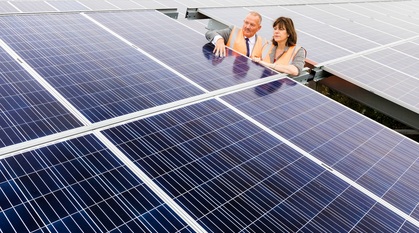
The good news is that climate justice is happening. It is happening wherever people join together, in their local communities and across the world, to build the future that we need. It is happening when we create clean and affordable energy, safe public transport, sustainable farming and food systems, homes that protect us from heat and flood and cold. Quakers are a part of that work, building wellbeing, community cohesion, health and hope.

_1.jpg)