Love around the table: food security and climate justice
Tanya Jones reviews the facts about food insecurity and asks what love requires of us in the midst of a crisis not just of climate and nature but of justice.
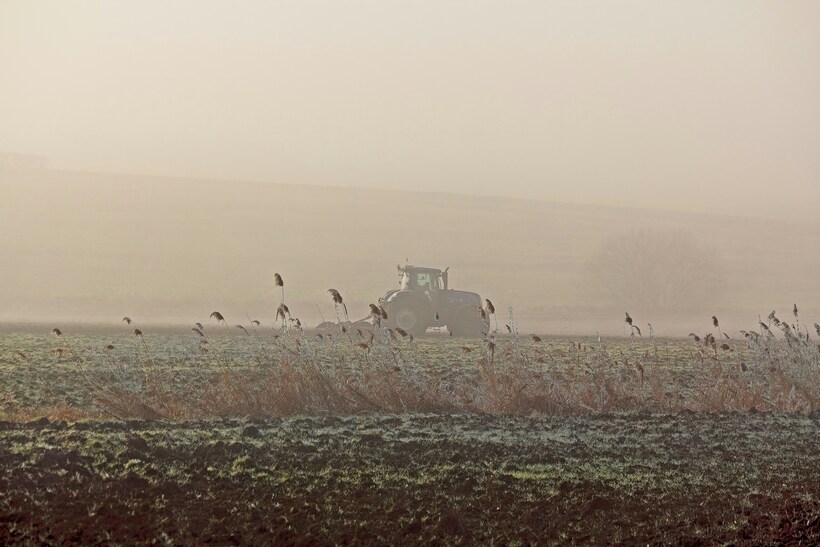
"I was farming water. I wasn't farming soil. My dad got flooded once in 1981, but since 2000, I've lost count of the amount of times that I've been flooded."
These were the words of Colin Chappell, arable farmer in Lincolnshire, about the 2023 flooding. He's not alone. Paul Behrens, a professor at the University of Oxford who works on food security, offered this quote as an example at the recent National Emergency Briefing on climate change and the UK.
The effects of climate change, including drought, floods, fires and disease, will damage food production in every region of the world. But, as a recent report shows, it is people already harmed by inequality, exploitation and conflict, people who are least responsible for greenhouse gas emissions, who will suffer the most. Today eight countries in the world are critically food insecure. In a world that is two degrees hotter, that number rises to 24. Food insecurity for high-income countries will worsen by 3%; for low-income countries by 22%.
This is climate injustice
We are not all in it together. The brutal blows of climate chaos don't fall equally upon us all. And they certainly don't fall most heavily on those who are most responsible. As the world burns, the gap between rich and poor widens into the deepest of chasms. In that chasm, homes and health, livelihoods and lives, families and futures are lost, barely noticed.
But it doesn't need to be like that.
Quakers and climate justice
"Attend to what love requires of you".
That call, in Advices & Queries number 28, speaks to us individually but also as Friends together. What, we ask ourselves, does love require of us today, in the midst of what is not only a crisis of climate and nature but of justice?
Our response is rooted in our faith, in its assertion that spiritual experience and social action are inseparable, drawing on our communal and individual conscience.
When we love, we do two things. We recognise the precious uniqueness of the other, seeing that each person has a seed of God within. And we care for them in whatever ways we can. That is true of our personal relationships, but it is true, as well, of our social responsibility. Justice, as Cornel West reminds us, is what love looks like in public.
Climate justice and our testimonies
Our understanding of climate justice is rooted in our testimony of equality, acknowledging that, as Judith Butler has written, "we are not yet speaking about equality if we have not yet spoken about equal grievability". Every life lost to climate harm, every family torn apart, every beloved place burned or flooded or made barren calls for our grief, our recognition and our care.
This is rooted in our testimonies of simplicity and sustainability, working for a future where all can live lightly, generously, and joyfully upon the earth.
It is rooted in our testimony of truth, speaking courageously and clearly about what we know, and being honest about what we don't know, what we've maybe chosen not to see.
And it is rooted in our testimony of peace, our roles as reconcilers as well as prophets. It calls us to speak boldly about the injustices which we perceive. And it requires us to take care in ascertaining how we speak. This combination of courage and restraint is what, at its best, gives our witness resonance, clarity and authority.
What can we do?
Head, heart, hands and voice, all can play a part in our answer to climate injustice. We can begin wherever we are; dig where we stand.
We can learn more, for ourselves and to counter growing misinformation. This article summarises the food insecurity report; the Carbon Brief website gives reliable evidence on many aspects of climate change.
We can enter, in imagination and prayer, into the lives of those most harmed by climate chaos. The book Words for a dying world, edited by Hannah Malcolm, is a good place to start.
We can join in practical ways to transform our world, such as changing to plant-rich diets and sharing in local food production. These actions can reduce emissions, build resilience and care for the poorest both locally and globally.
And we can speak out, with integrity and truth. The interwoven strands of climate justice – reducing emissions, implementing adaptation, repairing loss and damage and making space for unheeded voices – are not only ethically right but practically essential to build a shared and liveable future.
It is too late for the perfect, but never too late for the good. It is never too late to act in love and justice.