
Quaker’s stand for “No New Oil” continues despite harsh JSO sentence
A Quaker who recently completed a 700-mile climate pilgrimage has said that continued commitment to “No New Oil" is all that matters in the face of a 26-month sentence.
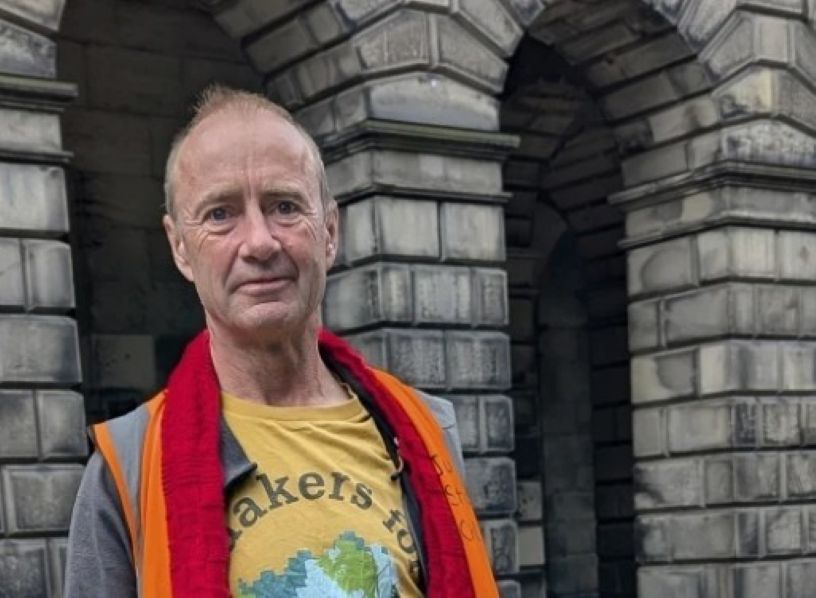
Andrew Dames, 63, of Jesus Lane Quaker Meeting, climbed a gantry over the M25 in 2022 as part of a Just Stop Oil (JSO) action to demand an end to new fossil fuel projects.
Dames walked from the Shetlands to London this summer, celebrating a Scottish ruling that approval of huge Shetland oilfield, Rosebank, was unlawful.
Last month he and five others were found guilty by a jury at Southwark Crown Court of recklessly causing public nuisance after the judge denied them all legal defences.
Dames, an engineer and father of four, said: “Our government's continued commitment to No New Oil that we and the country asked for, that is all that matters."
Judge Perrins told the jury that defendants could not use the statutory defence of “reasonable excuse", saying: “This is a court of law, not a court of morals.
“Even if you took the view that each defendant genuinely believed that they were morally justified in acting in the way that they did, that does not provide them with a defence to the charge of public nuisance."
He also ruled out the defences of necessity, Articles 10 and 11 of the European Convention on Human Rights and implied consent.
In a further departure from previous Just Stop Oil trials involving gantry actions on the M25, the prosecution also refused to accept any agreed facts on the climate crisis to be included as evidence.
Quakers, who are led by their faith to protect the environment, have been caught up in a wave of government repression of environmental defenders following disruptive action by JSO and others.
British courts have:
- Passed increasingly long sentences
- Restricted the defences available
- Prevented explanations of the climate crisis
- Told juries they cannot acquit a defendant as a matter of conscience
On Saturday, 6 December, Dames was added to the Quakers' prison and court register, begun in the 1600s to document Quakers prosecuted for acting on conscience and resistance.
Paul Parker, recording clerk for Quakers in Britain, said: “From our earliest days, Quakers have acted when conscience demanded it, even at great personal cost.
“Today, the climate crisis places the same demand upon us. It is painful that, once again, those who act from deeply held spiritual convictions face an increasingly harsh response."