Tending the flame: Quaker pilgrimage
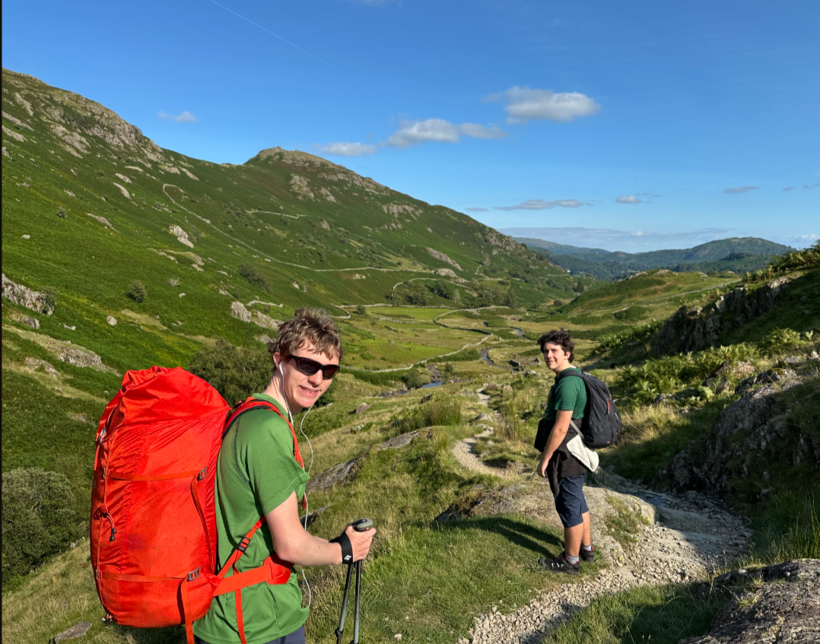
Last August, a group of Quakers walked through the Lake District, learning about how Quakers tend the living flame today in places with a rich Quaker history.
My aim of the pilgrimage was simple: Quakers often value Quaker heritage and history extremely highly, but some don't know as much about the 'living flame' that is being Quaker today and the tasks needed (and done!) to keep it going. Quakers in the past were in their own present time and making their own decisions about how to sustain this fire – all heritage used to be life.
I wanted to design something experiential that teaches you a lot of things about being a Quaker today, modelled roughly on the pattern of walking between meeting houses about a day's walk away from each other as was done way back when. Though this was unapologetically modern in the extent to which (for instance) we caught the bus when appropriate.
Our journey
We crossed over fells, round lakes, and wound through all those beautiful bits of the Lake District that are just off the beaten path. We crashed overnight in meeting houses and shared simple home-cooked food as a pop-up mobile Quaker community. We also had backup: Mo Kelly was spiritually upholding us throughout the weekend and got sent a lot of nice photos over the course of the trip.
We visited the Quaker Tapestry Museum on the Friday lunchtime before getting the bus up to Cockermouth. At Pardshaw we met some of their yearly workcampers and learned about the ongoing restoration efforts to turn the volunteer-run hostel into a hive of low-cost community-building. At Glenthorne we met Terry, the Friend in Residence, and learned about the Welcome Project to give holidays to refugees and asylum seekers. At Rookhow we were met by Kath and associated welcoming committee to see how the place has been transformed into a community-building space. At Swarthmoor we were met by Bill Shaw of Swarthmoor meeting who hosted us wonderfully at the meeting house, and then we had a tour of the historic Swarthmoor Hall to end the trip (with a gift shop!)
I found it very interesting to see the distinct Quaker characters of all the places we passed through. They're all in various states of renewal and targeted to various types of people, but they're all finding their own way to live.
Challenges for venues
It's not all cozy and comfort, though. I was somewhat disheartened to hear from a staff member at Swarthmoor Hall that a few of the midweek accommodation bookings turn out to be BAE short-term contractors working at the Barrow submarine base. And I'm glad to see Rookhow doing so well, but there were no more public residential Quaker events after our pilgrimage last year and Being Quaker, Doing Quaker almost got cancelled due to a projection of making a loss with the hire.
Glenthorne is wonderful to go to and is holding up residential Quaker spiritual education now Woodbrooke has lost its building, but is expensive – we stayed in the tipis at YHA Grasmere because our group on average couldn't afford the cost. And Pardshaw is genuinely affordable but in serious need of building updates and struggles to sustain itself even with an all-volunteer management group. Even Lancaster Meeting itself is fundraising for electrical work. They are all beset by individual challenges of how to balance Quaker character and work with the core economic viability needed to ensure ongoing survival. Fall too far one way and they won't be Quaker anymore, just a tourism business using the Quaker heritage brand for marketing. Too far the other way and they'll fall into disrepair and eventually cease to exist.
Building community
It's a difficult path to walk, and one that is walked in all of its many iterations all over the UK and beyond (and has been walked for three hundred and seventy five years). As Quakers we don't walk it alone but in a collection of groups. Within those groups, it's often those who undertake voluntary or low-paid work who get criticised the most. I hope that by deeply meeting the people who serve and sharing community we can build a culture of reflection and support.
I saw this with my pilgrimage too. It's just hard to find and engage Quakers (particularly younger Quakers) and if you want to do it without receiving any external funding you have to get extremely creative.
I'm committed to doing my bit to help make Quaker flavoured community building easier for ordinary people to do, because I think that's the only way Quakerism is going to survive in the UK. I'm a trustee at Pardshaw Quaker Centre now. Watch this space, I have plans. We will keep the flame alive!