Protecting the Coral Triangle
Ben Niblett shares how and why Quakers are involved in protecting the world's most biodiverse seas and the people who depend on them.
On 9 June a global campaign was launched to protect the Coral Triangle from fossil fuel expansion. You can join in by telling senior insurance staff to stop insuring new fossil fuel projects in the region.
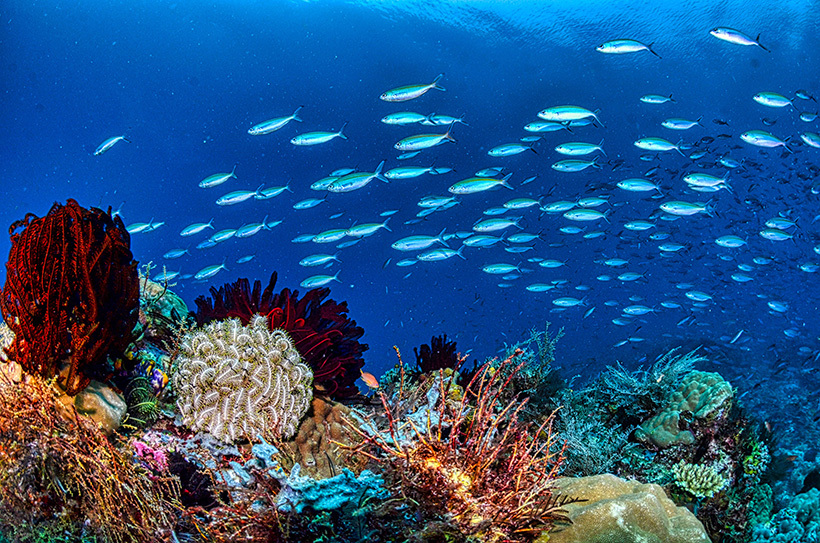
The Coral Triangle is a vast stretch of ocean spanning six countries across Southeast Asia and the Pacific. It is the world's most biodiverse marine region, home to three-quarters of all known coral species, and it supports the livelihoods of more than 360 million people.
The Quaker faith calls us to live with integrity, to work for justice, and to care for the whole of creation. The Coral Triangle is a perfect example of where our work is needed.
The problem: Fossil fuel development in the Coral Triangle
There are currently 113 oil and gas fields operating in the area, with dozens more in development and hundreds of exploration blocks. Plans exist to build at least 27 more Liquified Natural Gas (LNG) terminals, many near UNESCO World Heritage Sites and protected marine areas.
Campaign groups warn that expansion threatens the region's reefs, mangroves and seagrass beds. These provide vital coastal protection for communities in typhoon-prone areas.
The Coral Triangle campaign
People across the Philippines, Indonesia, and Malaysia in the Coral Triangle are calling on insurers to make the Coral Triangle a no-go zone for new oil, gas and LNG development, before irreversible damage is done. And people living where the big insurance companies are based, in the UK, France, Switzerland, Japan, South Korea and the United States, are joining them.
"For coastal communities in Palawan, the Verde Island Passage, Bali, and Tun Mustapha, the climate crisis means dwindling fish catches and days they cannot go to sea safely - threatening their food and livelihoods," says Anj Dacaney from Energy Shift South East Asia. “Yet the insurance industry continues to back the fossil fuel companies driving this crisis."
Why we are speaking out
When insurers underwrite new fossil fuel projects in places of irreplaceable natural beauty and biodiversity, places of protection and sustainable livelihoods, they become part of a chain of harm. That harm falls on communities, on wildlife, and on our shared climate.
Pressure on insurance companies has worked elsewhere. Over 20 insurers have adopted restrictions on oil and gas projects in the Arctic National Wildlife Refuge. So far only one – SCOR – has done so for the Coral Triangle, in response to the letter Quakers in Britain and others wrote to insurers in April.
Now is a vital time to protect this amazing region. We urge insurers to listen, while there is still time.