Faith, repair, and shared responsibility
During Christian Aid Week, Esta Nyeko-Lacek shares key ideas about reparations from Christian Aid's resource on Faith in Repair.

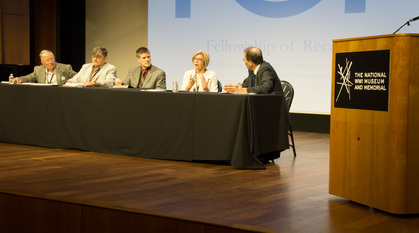
Moral necessity often precedes public confidence. This was an idea shared by Bell Ribiero-Addy MP when I attended an event hosted by Christian Aid to launch their new resource, Faith in repair. The resource explores reparative justice and the role of the Church in addressing the legacies of slavery, colonialism and extractive economic systems.
Ribiero-Addy's keynote talk at the launch covered the discomfort people feel around reparations and how it can lead people to deflect, distract, or reframe the issue as less urgent than other social issues. This resonated strongly with what we often encounter in conversations about Quaker work on reparations. Discomfort can cause people to raise other issues as though they are in competition, as if we are unable, or unwilling, to tackle multiple social injustices at once.
There is also a widespread unease with the concept of justice itself, which is too often framed as punitive. Yet the justice that reparations calls us to consider is reparative justice. It is not about punishment, but about honestly asking: what harm has occurred, who was affected, who continues to be affected, and who has the obligation to address these ongoing harms?
Bell's insight reminded us to act with courage, to refuse to allow discomfort to become a barrier to moral responsibility, and to remain honest about what justice requires. This call to courage speaks directly to Quaker commitments, especially the commitments to equality and peace, and the long tradition of active engagement in movements for social transformation.
Faith in repair and Quaker faith in action
The Faith in repair resource, from Christian Aid, has been produced as a companion for those wishing to understand more about reparations. The resource introduces the historical context and sheds light need for reparations today. The resource then explores theological reflections on the moral imperative for reparations. It also addresses common misapprehensions about reparations, for example:
“Why do we need to talk about reparations now? Didn't slavery and colonisation end hundreds of years ago?"
And
“My ancestors weren't involved in slavery. Why should I or my church care?"
Quaker in Britain are also profiled alongside the African Union Summit, and our partner organisation, the All Party Parliamentary Group for Afrikan Reparations.
It encourages readers to go out into the world to act in renewal, divine justice, and restoration, and to foster spaces for the ongoing development of reparative justice. Christian Aid asks for reparations to be integrated into theology, education, youth work, and public life, and to not be treated as a specialist issue.
What can be done to walk alongside this journey of reparative justice?
Using the Faith in Repair resource may involve holding a study group to go through the resource together, or selecting other materials to support exploration, or inviting a member of the Reparations Working Group to come to your area meeting to share more about our work. It could also look like carrying out truth-seeking activities, for example historical research. If you're interested, this link to the Reparations section of our website has lots of information on how you may go about this: Undertake your own research.
A strong theme throughout the event was the importance of learning from and supporting one another. Work that seeks to make radical transformative change, like the work of our Reparation Working Group, can often feel daunting. Yet the growing reparations movement is bringing organisations together nationally and internationally, as reflected in the diversity of organisations represented in the room.
Through collaboration, shared courage, and faith in action, we are contributing to a wider effort to realise transformative justice for those living within the ongoing legacies of African chattel enslavement. This is Quaker faith in action: not only bearing witness to injustice, but actively working to repair it.