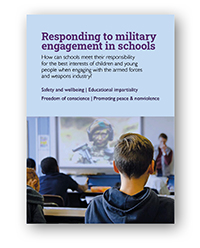
Responding to military engagement in schools
Thousands of British primary schools are visited each year by the armed forces and even arms manufacturers. This resource offers guidance for schools to navigate military engagement and consider their duties to students. Responding to military engagement in schools encourages critical thinking and draws on advice from English, Welsh and Scottish governments regarding educational impartiality. It also explains where to find practical resources that can help introduce a range of perspectives, as well as the obligation to promote peace, tolerance and nonviolence (UN Sustainable Development Goal 4.7 and the Convention on the Rights of the Child Article 29).
Download
Responding to military engagement in schools (PDF) - English version
Ymateb i ymgysylltiad milwrol mewn ysgolion (Cymraeg PDF) - Welsh version (with resources relevant to the Welsh curriculum)
Responding to military engagement in schools (PDF) - in English with Welsh curriculum links
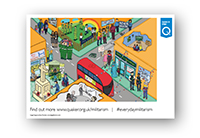
#EverydayMilitarism poster
As part of Quakers' work challenging militarism, this poster designed by
Abbey Thornton is a great way to spark off conversation about the roots of war and the kind of society we need to build peace. Suitable for use with children or adults.
Download
#EverydayMilitarism poster (PDF) - English version
Download
#EverydayMilitarism poster (PDF) - Welsh version
Explore the
Interactive version
Download learning and discussion activities (Word .docx)
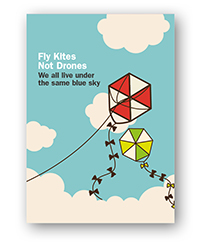
Fly Kites Not Drones
Fly Kites Not Drones brings together a range of learning materials about peace and human rights. The learning resource was made in Britain, but the inspiration comes from Afghanistan, a country that has known decades of war including armed drone strikes.
Inspired by Afghan Peace activists it explores children's rights issues raised by drone warfare. Learners explore these issues from varied points of view through drama and study and develop their ethical understanding of the issues. It also offers guidance for making and flying your own kite, which can be used to send a message of peace.
The resource is available at
Fly Kites Not Drones website (offsite link)
Fly Kits Not Drones - English version
Lawrlwytho (Cymraeg) - Welsh version
Order hard copies through the order form.
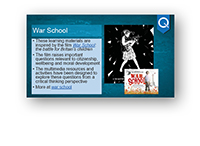
War School resources
War School is a film set against the backdrop of Remembrance. The controversial and challenging documentary reveals how, faced with unprecedented opposition to its wars, the British government is using a series of targeted strategies to promote support for the military. Armed Forces Day, Uniform to Work Day, Camo Day, National Heroes Day – in the streets, on television, on the web, at sports events, in schools, advertising and fashion – the military presence in civilian life is increasing.
Interweaving powerful testimonies of veterans of Britain's unbroken century of wars with expert commentary and archive footage, War School's mosaic of sound and imagery evokes the story of the child soldier who becomes a peace campaigner, challenging the myth of Britain's benign role in world affairs and asking if perpetual war is really what we want for future generations?
Download
War School (PDF) - PDF version of PowerPoint slides
War School multimedia teaching pack (PowerPoint: 38mb)
View
War School on YouTube
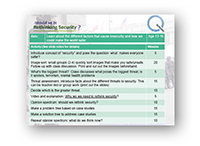
Do we need to Rethink Security?
As part of the Rethinking Security project we've created this secondary school lesson to explore what security really means. Often 'security' is framed as a defence concern, as with terrorist threats, but there are many other security concerns we all face at an individual, local, national, and global level. Young people will be all too conscious of things that make them feel insecure at various levels. This lesson will engage them in thinking about their own role in shaping a more secure world.
Download
Do we need to Rethink Security (PDF) - PDF version of Powerpoint slides
Do we need to Rethink Security (PowerPoint slides) - free from the TES website.
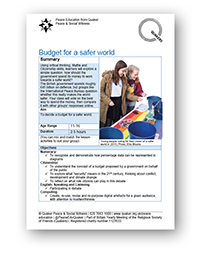
Budget for a Safer World Lesson
Inspired by the Global Day of Action on Military Spending (GDAMS) on 18 April 2016, this lesson explores four different ways the world could be made safer and gives learners the chance to vote on the best way. Suitable for secondary school age students.
Download
Budget for a Safer World - Lesson Plan (PDF)
Budget for a Safer World - Lesson Presentation (pptx)
Budget for a Safer World - Assembly Plan (PDF)
Budget for a Safer World - Assembly Presentation (pptx)
Budget for a Safer World - accompanying spreadsheet (xlsx)