
Court of Appeal backs ban on Palestine Action
The Court of Appeal has ruled that the government's decision to proscribe Palestine Action as a terrorist group was lawful, overturning an earlier High Court judgment. Quakers and others warn the ruling risks stifling dissent.
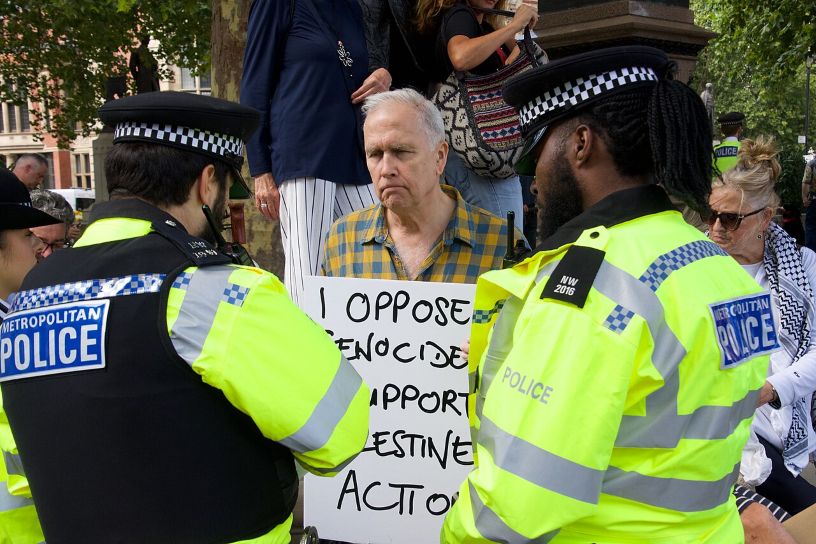
Quakers have long argued that the Terrorism Act, introduced in 2000, is overly broad and threatens civil liberties particularly where it extends to property damage, placing the UK outside international norms.
Five senior judges on Monday 15 June backed the Home Secretary's position, allowing the ban to remain in force despite widespread criticism and a civil disobedience campaign that has seen more than 3,000 arrests.
[QUOTE-START]
When the government changes the law so far that dissent is criminalised as terrorists, something precious is at risk
- Paul Parker
[QUOTE-END]
Paul Parker, recording clerk for Quakers in Britain, said: “When the government changes the law so far that dissent is criminalised as terrorism, something precious is at risk.
“Peaceful protest allows us to hold our leaders to account and challenge their decisions on those areas where our faith calls us to witness for truth, from illegal wars to the climate emergency."
Palestine Action co-founder Huda Ammori, who brought the case, said she would continue to challenge the ruling.
Dozens of Quakers, including elderly and disabled people, have been arrested under terrorism laws for non-violent protest, some simply holding placards reading: “I oppose genocide. I support Palestine Action."
Quakers in Britain had sought to intervene in the judicial review into the proscription of Palestine Action in September 2025, arguing it raised significant questions about religious freedom.
A High Court judge accepted Quakers' concerns were “seriously held" but refused permission.
The Court of Appeal rejected claims that Palestine Action is a conventional protest movement, describing it instead as a “covert organisation" whose actions involve serious property damage and risk to the public, aimed at shutting down lawful business “by intimidation, not persuasion".
As a church and charity, Quakers in Britain has never worked with or supported Palestine Action, but wide ranging and vague proscription laws mean they have struggled to navigate the implications.
Read the full Court of Appeal judgement in the Judicial Review of Palestine Action here