Researching historical Quaker complicity in enslavement
Historian Lily Chadwick explains how a recent project discovered what is known, and what can't be known, about Quaker complicity in enslavement.
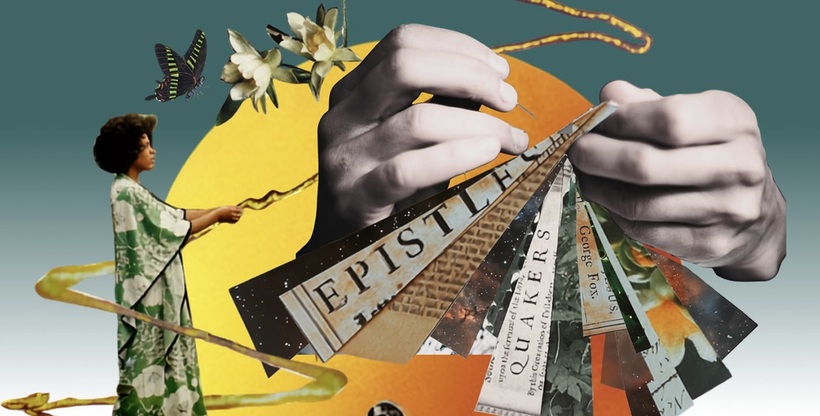
Over the last eighteen months, Woodbrooke Quaker Learning and Research has been involved in producing a report on the history of Quaker complicity in the trafficking and enslavement of African people and of people of African descent, on Quaker involvement in abolitionist movements, and finally, Quaker engagement with themes of liberation and reparation.
Each of these 'strands', as we refer to them in the report, provides a comprehensive overview of the theology Quakers used to 'justify' their approaches, actions, and beliefs regarding enslavement, abolition, and liberation.
As this research has developed, Woodbrooke has also been able to offer many sessions and courses to Friends with the intention of complicating traditional narratives told around Quakerism – namely 'traditional' histories which have only elevated Friends' work as abolitionists while ignoring Quakers' complex entanglements with transatlantic chattel enslavement.
Open hearts – and anger or disbelief
This work has received mixed responses from Quakers in Britain. Many Friends have engaged with this research with open hearts and a willingness to learn about harms committed by Quakers in the past and the continued legacies of this violence in the present. Others have been less receptive, and some have responded with anger or disbelief.
For some Friends certainly, the results of this report will be difficult to hear and read. It fundamentally challenges a narrative that has been told about beloved figures and communities, which can create feelings of uncertainty, confusion, and displacement. My colleague and co-author, Ben Wood, offers profound insights in the theology strands of this report as to how Friends may productively act on these feelings, to create a more hopeful and equitable future for all members of society within the Quaker faith.
But writing as the author of the historical research strands, I feel I must stress that very little of what I have written is actually novel. As a historian, my job is to interpret evidence (often written, but also oral or material evidence) to tell a story about the past. Many of the stories included in this report, however, have already been told. They've been known. Not just by professional historians, but by people whose lived experiences have been and continue to be shaped by the harms and violences inflicted in the past.
It is equally important to stress, however, that many stories in relation to this past remain unknown – the voices and experiences of people enslaved by Quakers were not recorded by enslavers nor are they represented as such in Quaker archives.
Scholars like Saidiya Hartman and Katharine Gerbner have written about such 'archival silences', and the violences they not only represent, but perpetuate. This report has aimed to highlight some of these archival silences in the research where possible, but what is needed is a report which centres the identities and experiences of people who were enslaved and marginalised, their acts of resistance and survivance.
Understanding the past to change the present
There certainly is still so much work to be done. It's no secret that we live in uncertain, challenging times. The world cries out for peace, for justice, and for love. I am a firm believer that we cannot begin to effect positive change in the present, if we do not understand the roots of the injustices and inequalities in the actions and choices taken in the past.
This learning is essential and must be used to help inform the work Quaker communities will hopefully undertake in coming weeks, months, and years in relation to reparative justice. As Lauren Brownlee and Zenaida Peterson write in their publication, Patterns of racial wounding and racial justice in Quaker communities, to ignore this history will only hinder or even preclude 'continuing revelation that could transform' Quakerism and its practices.
In order to become a truly inclusive and welcoming community, it is necessary that all aspects of Quaker history be incorporated into the narrative told by and about Friends' past. Acknowledgment of this history would constitute a critical first step in a collective movement toward reparative justice in all forms.
In his work, Race, systemic violence, and retrospective justice, Harold D. Weaver Jr reflects powerfully on the possibility of peace in the face of inequity, remarking: “Can there be peace without justice? Can there be equality without justice? In both cases, I do not believe so". It is my hope that, in an increasingly violent and turbulent world, Friends will choose to address the harms of the past and their ongoing legacies in the present to build a more peaceful and equitable future for all.