Everyone deserves the chance to be a peacebuilder and to live in a culture of peace and nonviolence. Quakers work to promote peace education across Britain so that we can uproot violence and cultivate positive relationships at every level, from the personal to the global.
Quakers challenge war and violence. We promote education rooted in positive peace and justice. We work with educators, young people and partners to develop and share creative peace education resources and practice.
Background
Quakers have been on the forefront of peace education for decades as part of a global movement, setting up national and community projects, training children and young people as peacemakers and working for a more just peace education system.
Peace education addresses Quaker concerns for peace, equality and sustainability, addressing global themes like war and climate justice, inequality and violence in communities, and mental health and wellbeing. Peace education is for people of all faiths and none, embodying Quakers' belief that everyone is equal.
Today, Quakers in Britain support educators with training and resources, advocate for peace in the education system, and work in solidarity with a diverse movement of educators for peace.
Training for educators
[QUOTE-START]
I feel peace education is about teaching children to discover that they have the power to change things they see are wrong and developing the imagination to find alternative responses to conflict.
- Janet Galbraith, Quaker faith & practice 23.85
[QUOTE-END]
Peace education is happening all the time in learning settings across Britain. We equip and support teachers and educators with resources and training to help.
Our online course with the Open University is a free and easy way to explore peace education.
We also offer tailored teacher training and a range of themes including conflict and restorative approaches, global citizenship education, climate justice and exploring armed conflict. Email peaceedu@quaker.oprg.uk or fill in our request form to let us know what you are looking for.
Classroom resources
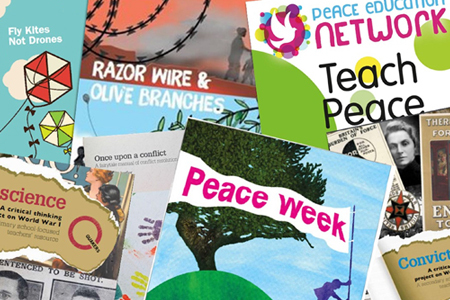
You can find excellent classroom materials on a range of peace themes on our resources page.
Peer Mediation – youth-led conflict resolution
[QUOTE-START]
the way in which young people learn to respond to conflict will have a pervasive effect both on the quality of their personal lives and on the prospects for society as a whole
- Tom Leimdorfer and Sue Bowers, Quaker faith & practice 24:5
[QUOTE-END]
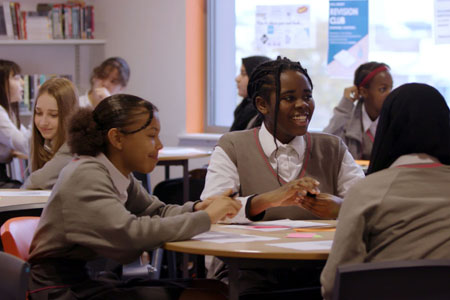
Children and young people are fantastic peacemakers, and peer mediation gives them an opportunity to show this in their schools. Peer mediators are trained in the same principles and practices as adult mediators, helping those the same age and younger find solutions without taking sides.
Quakers are working to train more peer mediators across Britain by building capacity in schools and civil society. We offer train the trainer opportunities for people who want to train peer mediators, and work with partners to build national support. Find out more.
Making the case for peace education
Peace education can make a big difference to children and young people's lives and it should be embedded in policies that empower teachers and schools. In our report, Peace at the heart, we have laid out our vision for a relational approach to education, and what steps policymakers and school leaders can take.
Because each nation in Britain has its own education system, we work with partners in England Scotland and Wales to promote peace education policies in their context. Find out more.
Demilitarising schools
To safeguard children's rights and wellbeing, Quakers challenge the militarisation of education. Arms companies and the British military are a frequent presence in schools, and the UK continues to recruit young people at 16 despite the well-documented dangers.
Quakers offer schools guidance and resources on how to respond to military engagement in schools in a way that safeguards learning and wellbeing. Find out more.
Grassroots peace education
Quakers around Britain are delivering peace education in their communities. From established charities to fresh voluntary projects, Quakers are sowing seeds of peace in schools. Our friends at Peacemakers are helping Quakers collect and share.
Get in contact if you want to explore peace education in action at peaceedu@quaker.org.uk or call 020 7663 1009.
Useful peace education links
The Peace Education Network brings together organisations and practitioners from around the UK to share and connect. www.peace-education.org.uk
The Global Campaign for Peace Education movement of individual peace educators, NGOs, universities, schools, and government partners committed to fostering cultures of peace through peace education. www.peace-ed-campaign.org
Peacemakers is a Quaker Recognised Body based in Birmingham, supporting learning for peace in schools across the West Midlands. www.peacemakers.org.uk
RJ Working is a Quaker Recognised Body based in Cornwall, Empowering young people to create fairer communities through Restorative Leadership programmes. www.rjworking.co.uk